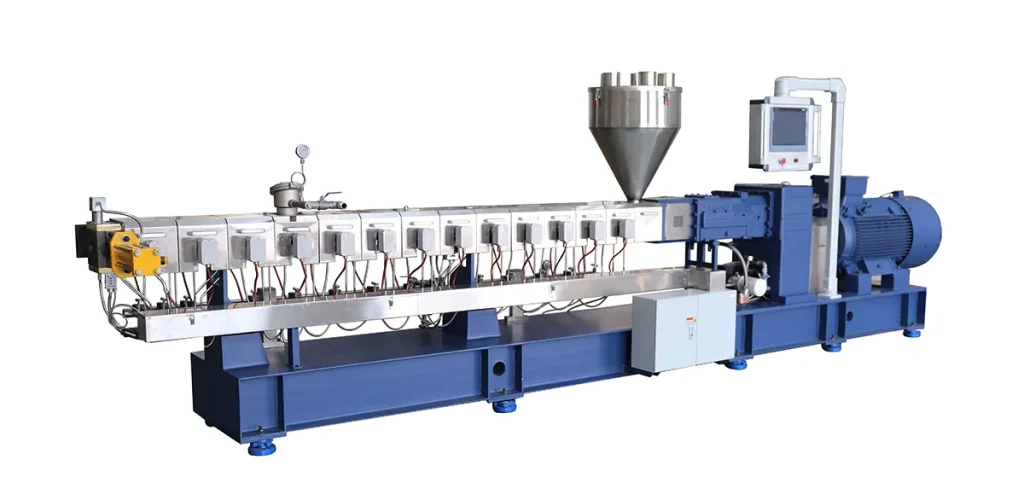
TWIN SCREW EXTRUDER

KNEADER
PROPER SELECTION OF PIGMENTS & ADDITIVES

THE BLUE WOOL SCALE


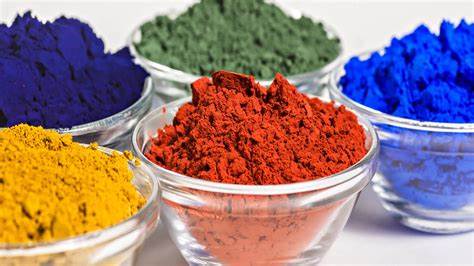
The Masterbatch, in general, contains two types of pigments: organic and inorganic.
The organic pigments have good colour strength and high brilliance, but low opacity. For example, the colours are bright but often transparent. The inorganic pigments have the opposite characteristics: less colour strength but high opacity. By combining these two groups, a bright colour with greater opacity is often achieved.
The following factors are to be considered while selecting the pigments:
The pigment suitability for the actual resin with regards to:
a) Resistance to migration.
b) Temperature resistance.
c) Dispersion & Light stability.
d) Opacity.
e) Cost.
f) The pigments, dye additives and resins’ suitability for coloring articles to be used for food containers, packaging etc.
The following information is given for each illustration:
1) Products
The product name is indicated.
2) Additional level
In actual practice, addition level will be different depending upon opacity requirements of the user.
• For Film: 7 to 8%
• For Moulding: 1 to 2%
(by weight)
3) Heat stability
Heat resistance is of course dependent on the properties of the polymer itself. The indication given corresponds to the maximum temperature in degrees centigrade at which no colour change was observed after a residence time of 10 minutes.
4) Light fastness:
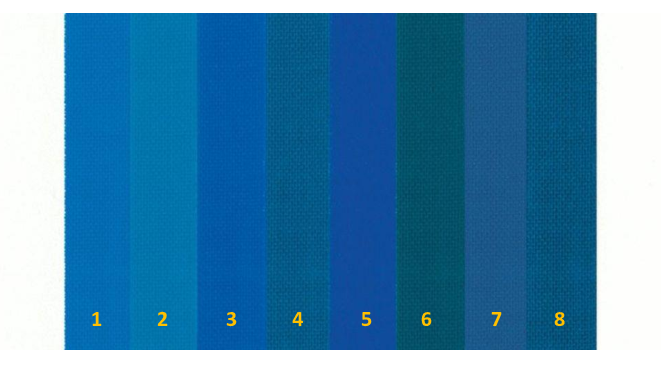
Light fastness is expressed according to the Blue Wool Scale where 8 is excellent and 1 is very poor.
Light fastness Rating
Excellent 7 – 8
Good 5 – 6
Fair 3 – 4
Poor 1 – 2
Light fastness ratings depend on the addition level of the Masterbatch, type of product, and the base polymer. Higher addition levels and thicker products generally give higher fastness ratings.
5) Migration Resistance:
Pigments and additives used in the production of Masterbatch sometimes migrate to the surface of the plastic products. Migration Resistance is generally measured from 5 to 1 scale. A rating of 5 indicates excellent stable condition and that the pigment used in the Masterbatch will not migrate from the polymer to any external material.
A rating of 1 implies poor migration resistance.
Migration resistance Rating
Excellent 5
Good 3 – 4
Fair 2
Poor 1
6) Approval for food packing use:
Some of Masterbatches are recommended for food and pharmaceutical packaging where pigment and polymer required for food packing are considered during manufacturing of Masterbatch. However, food packing mainly depends at end-user level since it also requires proper understanding of conditions of polymer being used in food packing.